

Agentic Intelligence
Agentic Intelligence gives models, agents and end users a shared foundation for asking questions, generating answers and building AI experiences grounded in the same live understanding of your business, so one agent’s action can become the next agent’s context.
Answers come from the data
your applications just wrote.
Agentic Intelligence runs on SingleStore Helios, one engine for transactions, analytics, vector and full-text search. An answer reflects a write from moments ago, with no copy or sync in between.
Ask questions in natural language and get trusted answers.
Run AI directly in SQL. Summarize, classify, embed and enrich, without moving data.
Connect your development tools directly to SingleStore and work with live data.
Context Engine
A reusable semantic layer that unifies your data, business logic and relationships into trusted context
The foundation that gives AI real understanding
Use the right model for the job, hosted or open source. Bring your own or choose from our curated catalog
Flexibility to match your data performance and cost needs
One engine for transactions, analytics, vector and full-text search, on one live copy
Build for operational and analytical workloads
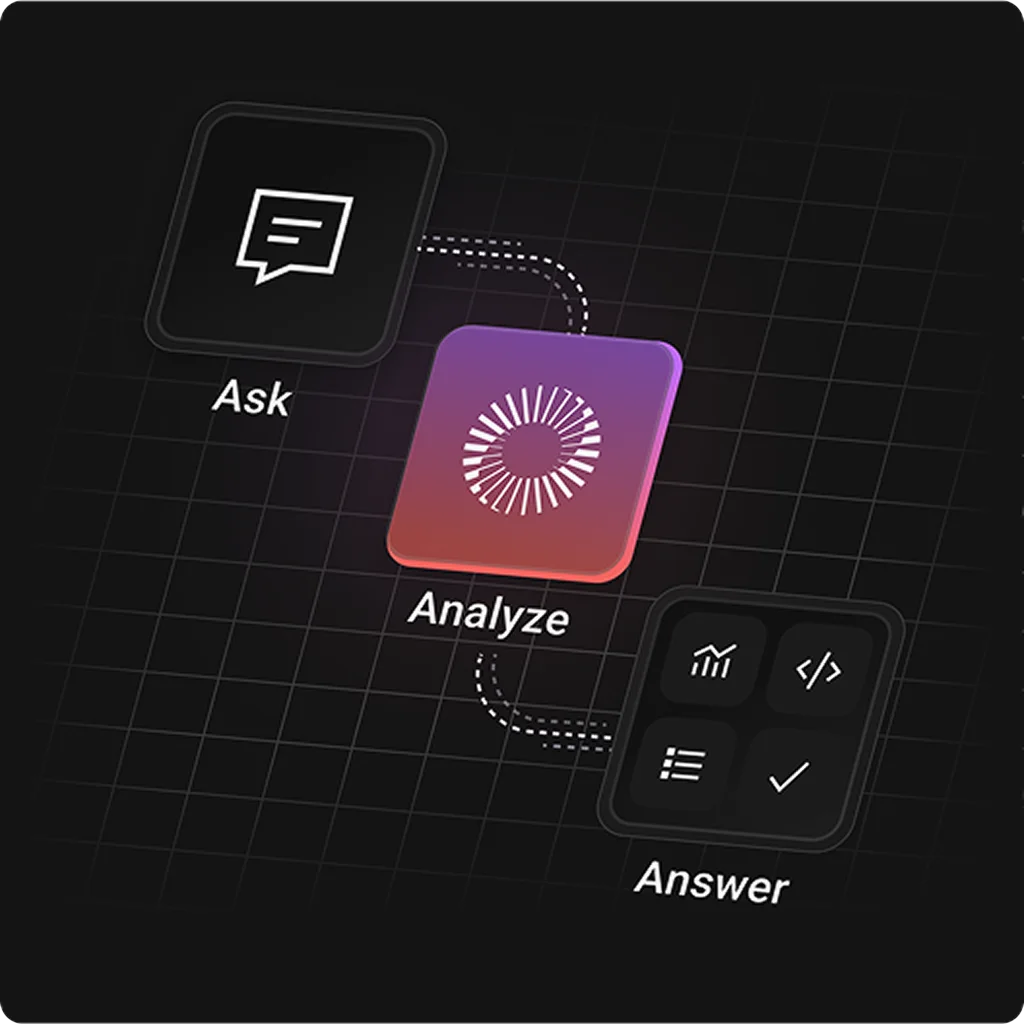
Users ask questions in plain English, and Aura Analyst interprets the request, plans the query, generates SQL, validates it, executes it against live operational data and explains the results. Where it makes sense, it also returns charts and visualizations.
Business leaders can answer more of their own questions without waiting for dashboards or SQL requests, while engineering teams retain complete visibility into the generated queries and continue to govern how data is accessed.
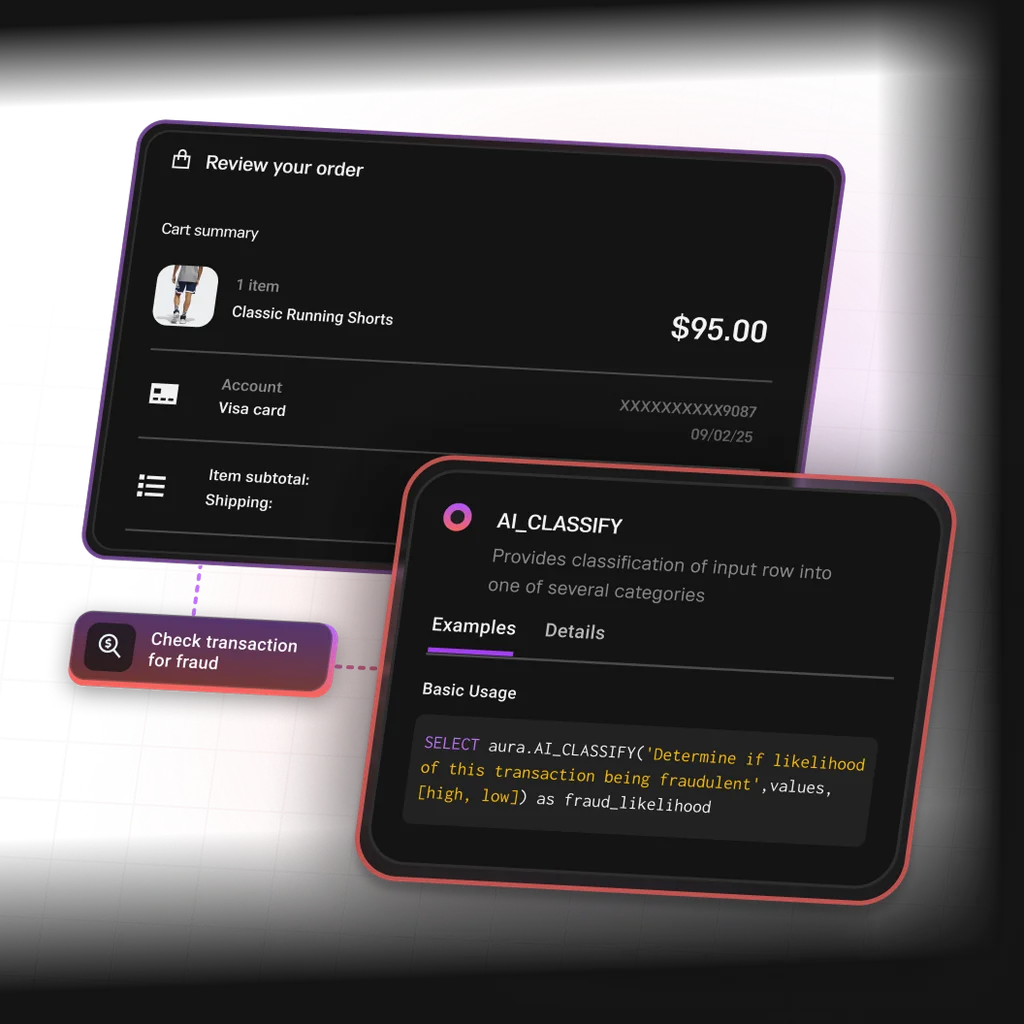
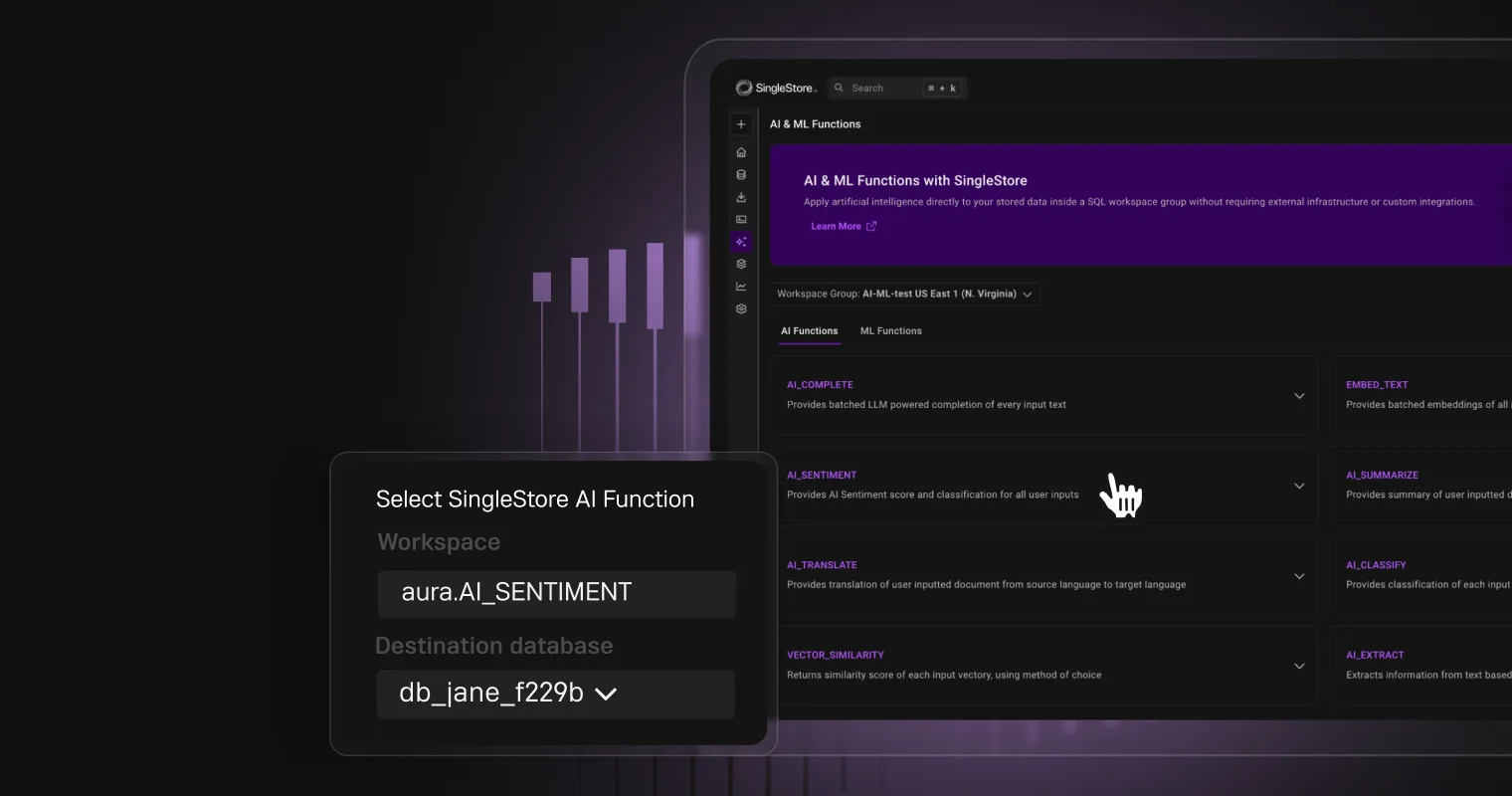
With AI Functions, teams can call AI capabilities from SQL. That makes it possible to classify, summarize, score or enrich data without first exporting it to another system.
Models give teams flexibility in how inference runs. You can call externally hosted models or run open-source models closer to your SingleStore environment when latency, control or data locality matter more.
Embeddings can be stored and searched as native vectors alongside the rows they describe. That means similarity search can run against current operational data instead of a separate vector database that only reflects the last sync.
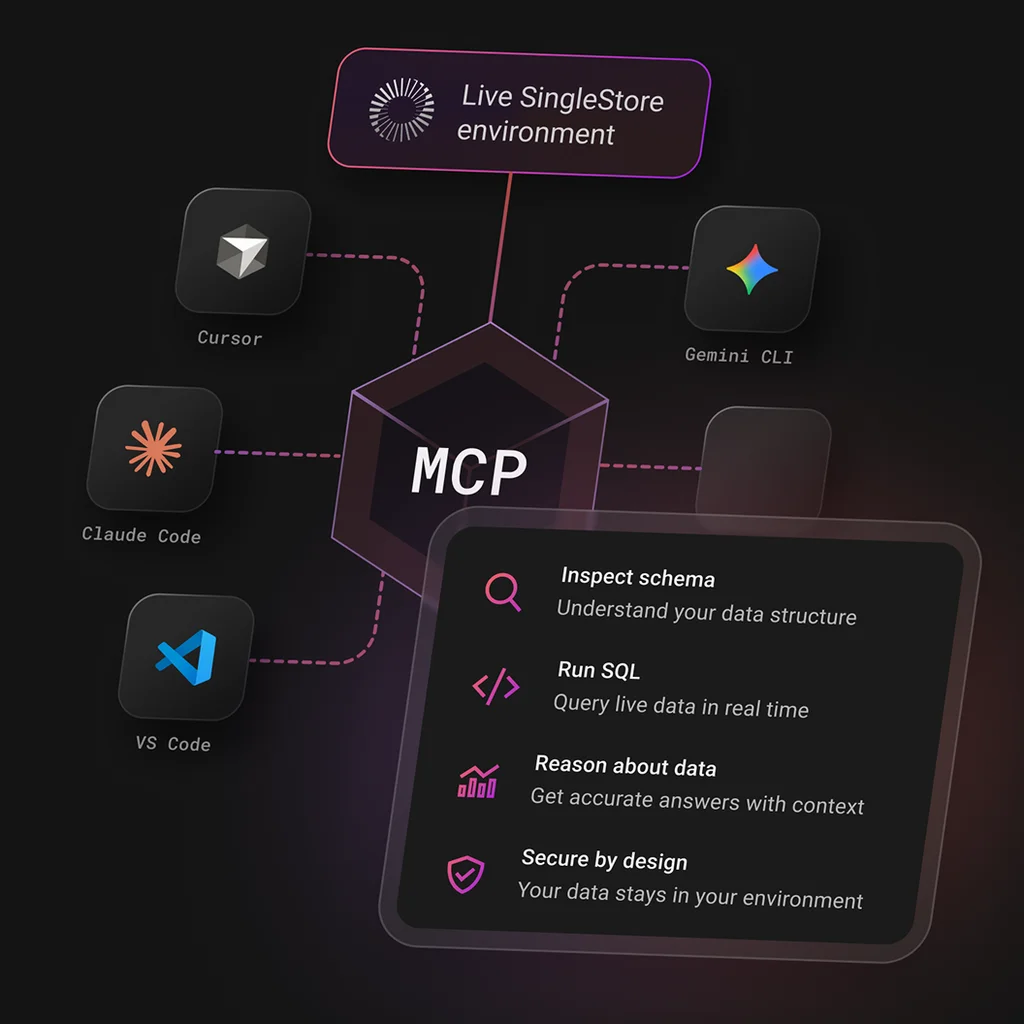
Developers can connect tools like Cursor, Claude Code, VS Code, Claude Desktop, Windsurf, Gemini CLI and other supported clients to live SingleStore environments. Their coding assistants can inspect schema, run SQL and reason about real data without relying on pasted table definitions or stale exports.
For engineering teams, that means the assistant works from the database as it is, with its real schema and its current data.
Authentication uses a browser-based OAuth flow for local development. Docker-based clients use API key configuration.
Vector and full-text search,
joined to the rows they describe.
Hybrid vector and full-text search runs in one SQL query on current data, with no separate vector database to keep in sync. In VectorDBBench, on 10 million 768-dimension vectors, SingleStore matched the search performance of Pinecone and Zilliz.
Self-service operational analytics
Let business teams ask questions against governed live data without waiting for every answer to become a dashboard. See Aura Analyst
AI agents with shared context
Developer copilots for live data
Real-time AI applications
Use fresh operational data, vectors, SQL and model calls to power personalization, fraud detection, recommendations, support automation, telemetry analysis and other workloads where stale context is not good enough. Build with vector search
Embedded intelligence inside products
AI on live data,
in production today.
Real-time
AI reads the rows your applications just wrote.
Secure + Governed
Answers run under your database permissions, and engineers can see every query Aura Analyst generates.
Open + Interoperable
Connect the models, tools, and platforms you already use.





Start building today
Your intelligent apps are about to get even better